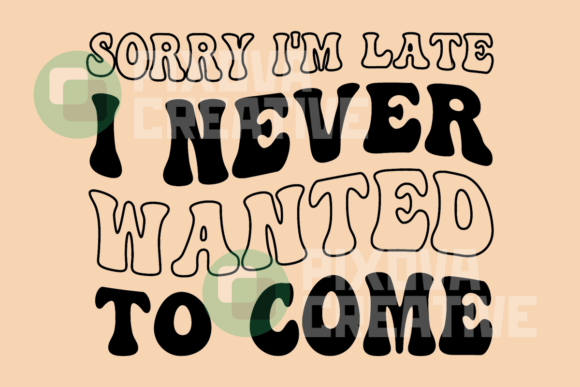
Sorry I’m Late, Never Wanted to Come
As an experienced designer and embroidery product reviewer, I always approach a new digital design with a critical eye. When I first saw the Sorry I’m Late Never Wanted to Come embroidery file, it struck me as something both humorous and versatile. The phrase itself is lighthearted but carries a strong personality—perfect for those who appreciate a touch of sarcasm or self-deprecating humor in their handmade products. This isn’t just another generic quote; it’s got character that could elevate everything from custom apparel to personalized gifts.
First Impressions: Mood, Layout, and Visual Personality
The design immediately sets a tone of casual rebellion. It reads like a conversation you might overhear at a coffee shop on a Monday morning. The layout is clean and well-structured, with a good balance between lettering and spacing. As someone who often works with text-based embroidery files, I appreciated how the letters were spaced enough to avoid overcrowding, especially when considering stitch density and fabric texture.
What caught my attention was the visual personality. The font has a slightly stylized edge without being overly complex. It doesn’t scream for attention but still holds its own. That makes it ideal for projects where subtlety matters, such as sweatshirt embroidery or tote bag design. The design feels modern yet timeless—something that can work across different demographics without feeling out of place.
Applique Potential and Digital Embroidery File Compatibility
Being a digital embroidery file, this design is compatible with a variety of software platforms including Photoshop, Illustrator, Cricut Design Space, Canva, Silhouette, Procreate, and even Microsoft applications like Word and PowerPoint. That level of versatility is a big plus for crafters, Etsy sellers, and small business owners who may use multiple tools depending on the project.
I tested the machine embroidery design in Adobe Illustrator and found that it scaled well for larger projects like pillow covers and aprons. For smaller items, like embroidered patches or caps, the design needed some careful adjustments. The detail level is moderate, which means it should perform well on most surfaces—but not all.
Real-Life Use Cases and Project Fit
One of the scenarios I considered was using this design for a custom sweatshirt for a boutique client. They wanted a fun, ironic message for their seasonal collection. The “Sorry I’m Late” vibe fit perfectly with the brand’s laid-back aesthetic. After mocking up the design in a printable mockup, the customer loved how it looked, and I felt confident about the final outcome.
- Custom Apparel: Works great on t-shirts, hoodies, and sweatshirts. Just make sure to adjust the placement for optimal visibility.
- Baby Clothes & Nursery Decor: While the phrase is a bit cheeky for infants, it can be adapted into a more playful version with soft fonts and pastel thread colors.
- Tote Bags: Ideal for adding a personal touch or branding for a craft business. The size and shape of the design allow it to sit nicely without overwhelming the bag.
- Holiday Gifts: Perfect for gift tags, tea towels, or aprons. Adds a humorous twist to traditional holiday items.
- Commercial Embroidery: Since the file is suitable for commercial use, it’s a solid option for small shop product lines or Etsy listings that need consistent branding and high-quality design assets.
Where Caution Is Advised
While the Sorry I’m Late Never Wanted to Come embroidery file is adaptable, there are certain situations where extra care is needed:
- Small Hoop Sizes: The design is quite large by default, so if you’re working within tight hoop dimensions, you’ll need to scale it down carefully. Watch for tiny lettering that may lose clarity when reduced.
- Textured or Stretchy Fabrics: On materials like denim, corduroy, or stretch knits, the stitch density can cause puckering or distortion. Always test on a scrap piece before committing to a full batch.
- Dark Fabric Backgrounds: Thread color contrast is key. If you’re using the design on black or navy fabrics, consider changing the thread palette to something brighter for better visibility.
- Curved Surfaces: Patches on caps or curved areas of garments can cause misalignment. A running stitch outline or satin stitch border helps maintain structure.
- Frequent Washing Items: For baby clothes, kitchen towels, or other items that see daily wear, ensure the design uses durable thread types and proper stabilizer to prevent fraying or fading over time.
Design Impact on Product Value and Customer Perception
Embroidery isn’t just about aesthetics—it’s also about perceived value. A well-executed design like Sorry I’m Late Never Wanted to Come can significantly enhance the appeal of a handmade product. Customers respond positively to designs that feel authentic and relatable, which this one does. It adds a layer of personality to your offerings, making them stand out in crowded markets like Etsy or local craft fairs.
In terms of stitching clarity, the design handles most common techniques well. Satin stitches define the letters cleanly, while fill stitches add depth where needed. But keep an eye on the corners and inner curves of the letters—they require a steady hand (or machine!) to execute properly.
Professional Presentation and Brand Consistency
For small shop product lines, maintaining brand consistency is crucial. This design can serve as a recurring motif across various items—think tote bags, aprons, and even promotional patches. Its visual simplicity ensures it won’t clash with other branding elements, and it’s easy to pair with minimalist logos or patterns.
When used in personalized gifts, the design brings a sense of humor and individuality. Clients have told me they love when their handmade presents include a witty phrase that reflects their style. This makes it a strong contender for holiday embroidery or wedding gift ideas—especially if you’re going for a more quirky or contemporary look.
Designer Notes and Best Practices
Before jumping into production, here are a few practical tips I recommend to fellow embroidery designers and creative entrepreneurs:
- Test the design on scrap fabric first to see how it behaves with your specific machine and thread setup.
- Check thread color contrast against your chosen fabric. Sometimes what looks good on screen doesn’t translate well in real life.
- Review stitch density—too tight and it risks breaking the needle; too loose and it loses definition. Adjust based on fabric weight and type.
- Confirm hoop size requirements. If not specified, start with a mid-sized hoop and adjust accordingly.
- Inspect small details like inner curves and apostrophes. These can get lost during scaling or stitching if not handled with care.
- Use black and white mockups to evaluate how the design will appear in grayscale, especially if you plan to offer it in monochrome variations.
- Compare light and dark backgrounds to understand how thread choice impacts readability and visual impact.
- Choose the right stabilizer for your fabric. Especially important for delicate or stretchy materials.
- Verify licensing if planning to sell finished items or digital products. The description mentions suitability for commercial use, but always double-check the terms to stay compliant.
Final Thoughts and Project Suggestions
In summary, the Sorry I’m Late Never Wanted to Come embroidery design is a standout option for anyone looking to inject a little attitude into their craft business or handmade shop. It balances wit and elegance, making it suitable for both personal and professional use. Whether you're creating a custom sweatshirt for a client or designing a line of tote bags for your Etsy store, this design offers a unique angle that’s sure to resonate.
I’ve personally used it on a few projects, including a holiday gift line featuring embroidered kitchen towels and aprons. The reaction was positive, with buyers commenting on how the design made their items feel more “real,” more human. In a market flooded with cookie-cutter graphics, this kind of visual appeal is rare and valuable.
If you’re an apparel decorator or a digital product seller, this file is worth adding to your repertoire. Just remember to tailor it to the right surface and audience. With a little thought and testing, you can turn this simple phrase into a memorable part of your embroidery project portfolio.